Mostrando postagens com marcador dicas; inglês;. Mostrar todas as postagens

sexta-feira, 26 de outubro de 2012

Simple Present


por Anailde Ribeiro

Gente, hoje estudaremos um assunto simples, mas, que precisa de atenção.
SIMPLE PRESENT
Em primeiro lugar, o Simple Present refere-se ao Presente Simples, sendo usado nos seguintes momentos:
  • Para falar de ações habituais (rotina, estilos de vida, hábitos);

Mary takes her children to school every day.
  • Para falar de verdades universais;

The moon revolves around the earth.

  • Para falar de situações, de modo geral, permanentes;

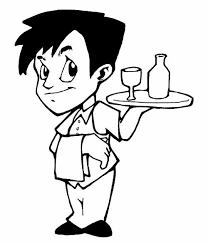
                My best friend works as a waiter in a restaurant.
  • Para falar de ações futuras relacionadas com horário previamente fixado;

                Her flight leaves for Paris at 7:30 p.m.
  • Para descrever fatos históricos, relatar acontecimentos, um filme, é chamado de “presente histórico”;

 Imperator Pedro I abdicates and his son Pedro becomes Pedro II.
  • Para dar instruções em uma receita ou demonstração em laboratório;

                Fisrt you get flour and eggs, then you mix them in a bowl.
  • Com verbos que indicam processo mental, sentimentos, sentidos, como: to know, to understand, to believe, to have, to belong (to);

                Do you understand what I am saying?
  • Em orações temporais, introduzidas por when, as soon as, after, until;

                Please give the secretary this message as soon as she arrives.
               
Em relação à forma, é preciso atenção, pois, a 3ª pessoa do singular no Simple Present é diferente das demais pessoas:
Os verbos tem a mesma forma do infinitivo para todas as pessoas, exceto para a 3ª pessoa do singular, a qual se acrescenta –s ou –es. O verbo to be é excluído dessa regra geral.
  
IMPORTANTE!
  • Os verbos modais (can, must, may, shall, will) têm apenas uma forma para o Simple Present, ou seja, não se acrescenta –s à 3ª pessoa do singular.

                He must talk when he are allowed to.
  • O verbo to have tem uma forma irregular para a 3ª pessoa do singular no Simple Present.

                I / You / We / They HAVE a ball.
                He / She / It HAS a ball.

IMPORTANTE!
  • Para formar a 3ª pessoa do singular dos verbos terminados em o, s, ss, x, ch, sh, z acrescenta-se –es;

                go – GOES                          mix – MIXEX                      floss – FLOSSES
                flush – FLUSHES               watch – WATCHES          fizz – FIZZES
  • Os verbos terminados em consoante + y, muda-se o y em I e acresta-se –es;

                dry – DRIES                        study – STUDIES
  • Os verbos terminados em vogal + y, seguem a regra geral;

                enjoy – ENJOYS                               play - PLAYS
                                              

 Ficou com alguma dúvida?
Entra em contato com a gente: palavrafemininaar@hotmail.com
Abraços e até a próxima.

sexta-feira, 21 de setembro de 2012

Prepositions III


por Anailde Ribeiro


Bem, estamos terminando nosso estudo sobre as Prepositions e hoje estudaremos:

Preposições DE MOVIMENTO OU DIRECIONAMENTO:


TO: para.
I went TO the mall and bought this dress.

IMPORTANTE!

Não se usa to diante de home.
I’M GOING TO HOME (ERRADO)
I’m going home. (CERTO)

 
TOWARDS: em direção a.
I was walking TOWARDS the library when I met you.


FROM:  desde (indica origem).
Where are you FROM? I’m FROM Recife, Pernambuco.


IN/INTO: movimento para dentro.
We went INTO the museum together.
Look at yourself IN the mirror.

IMPORTANTE!

I walked IN the street. (já estava na rua)
I walked INTO the street. (entrei na rua a pé)

OUT OF: movimento de saída.
Get OUT OF here. Leave me alone.


ONTO: movimento de chegada a uma superfície horizontal ou vertical.
The cat jumped ONTO the table.
 

ALONG: ao longo de.
The runners were training ALONG the road.


ACROSS: através de (um plano, uma reta)
There are several bridges ACROSS the Capibaribe.

THROUGH: através de (passando por).
Look THROUGH the window.


UP: movimento para cima.
Please, go UP the stairs and call Stela.

DOWN: movimento para baixo.
Someone pushed the boy and he fell DOWN the stairs.

OVER: acima.
I had a glance at the clock OVER the door.

UNDER: debaixo, sob.
I saw a light coming from UNDER the door.

AROUND/ROUND/ALL OVER: ao redor, por todo (a).
The earth goes ROUND the sun.


Por hoje é só, pessoal! Semana que vem, voltamos com o Cantinh das Autoras!

         Ficou com alguma dúvida?

Entra em contato com a gente: palavrafemininaar@hotmail.com

Abraços e até a próxima.